
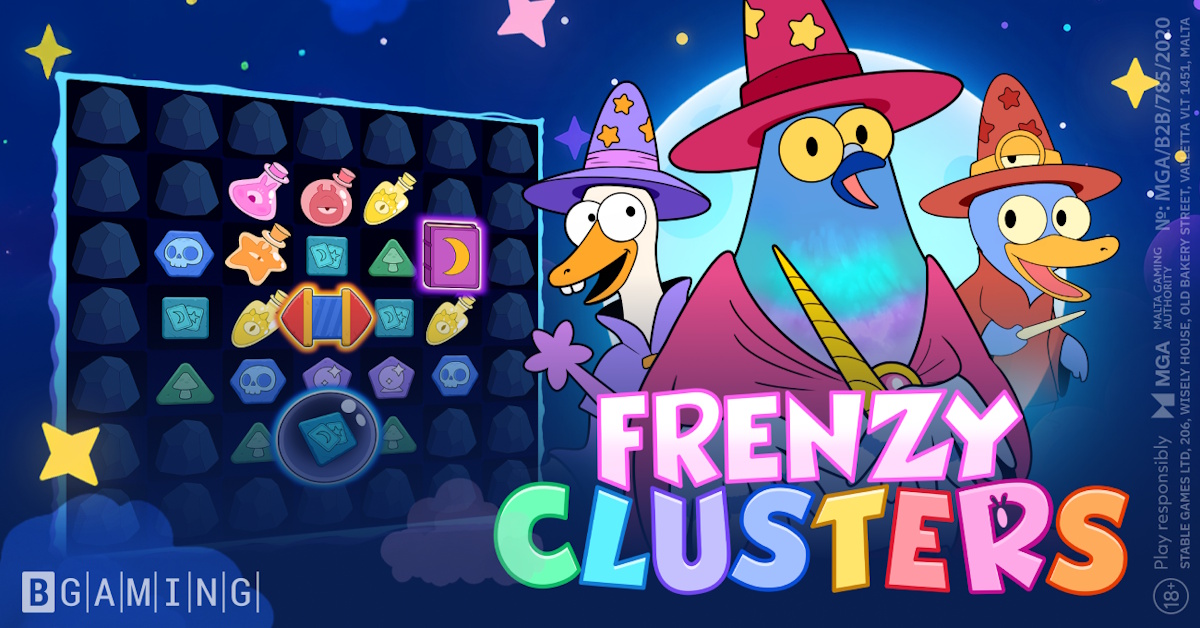
BGaming’s June release, Frenzy Clusters, invites players into a dark, mysterious world where five heroes stand ready to guide them through an adventure. The game’s cluster pays mechanics, cascading wins, and expanding grid create a journey of discovery, with two distinct Free Spins modes offering different paths to the 10,000x max win. We spoke with Alex Baliukonis, Game Design Team Lead at BGaming, about the development journey, the role of player and streamer insights, and why character selection became part of the experience.
Gamingslots: Cluster pays games are well-established, and Frenzy Clusters brings a 7×7 grid and hero system into that space. Where did the concept start, and how did it evolve from the initial idea to the final game?
Alex Baliukonis: When we started working on Frenzy Clusters, we didn’t want to create just another cluster pays game. We wanted to try a few new ideas and bring something different to our portfolio.
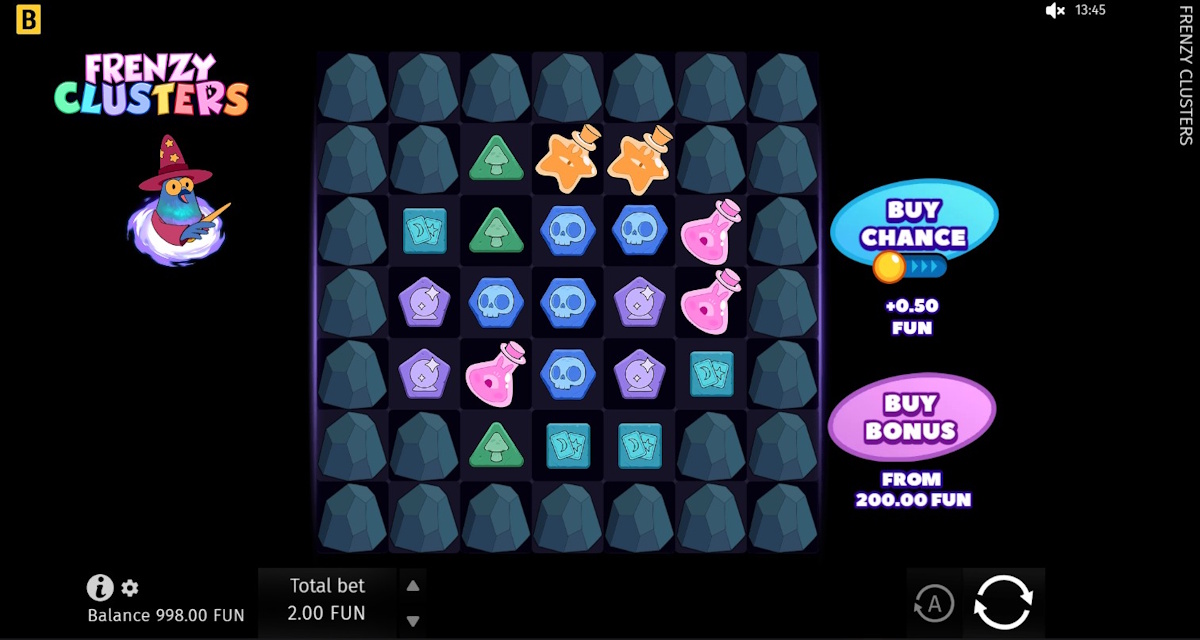
One of the main ideas was the gradually opening game field. At that time, we saw this type of mechanic gaining more attention on streams, and we liked how it sparked curiosity and kept players engaged. We thought it could be an interesting fit for this genre.
We also thought about how people play and watch games today. Even if a player steps away for a moment, the game world doesn’t stop.
The game changed a lot during development. We tried many different directions at the beginning: monsters, an Egyptian theme, something closer to Potion Spells by BGaming, and some more experimental art styles. After a lot of testing, the dark world with stones and a more mysterious mood felt like the right choice. It gave the game the strongest identity and the best emotional feel.
Looking back, Frenzy Clusters is a result of many iterations. Many of the things we have in the final version emerged step by step through testing, team discussions, and simply trying to find the right experience for players.
GS: The Cluster Pays genre has plenty of titles competing for attention. What makes Frenzy Clusters stand out as a player experience, beyond just the mechanics?
AB: For BGaming team, the most important thing was to make a game that players remember not only for the mechanics but also for the feeling it gives them.
We focused a lot on creating a sense of progression. As the field slowly opens up, the cascade chains, special symbols, and character choices all create a feeling that something interesting might happen on the next spin.
We also thought about how people play and watch games today. Even if a player steps away for a moment, the game world doesn’t stop. Small details continue happening, like eyes appearing in the darkness. These little things help build the atmosphere and make the game feel more alive.
We wanted Frenzy Clusters to be a game players return to not only for the wins, but because they enjoy the experience itself.
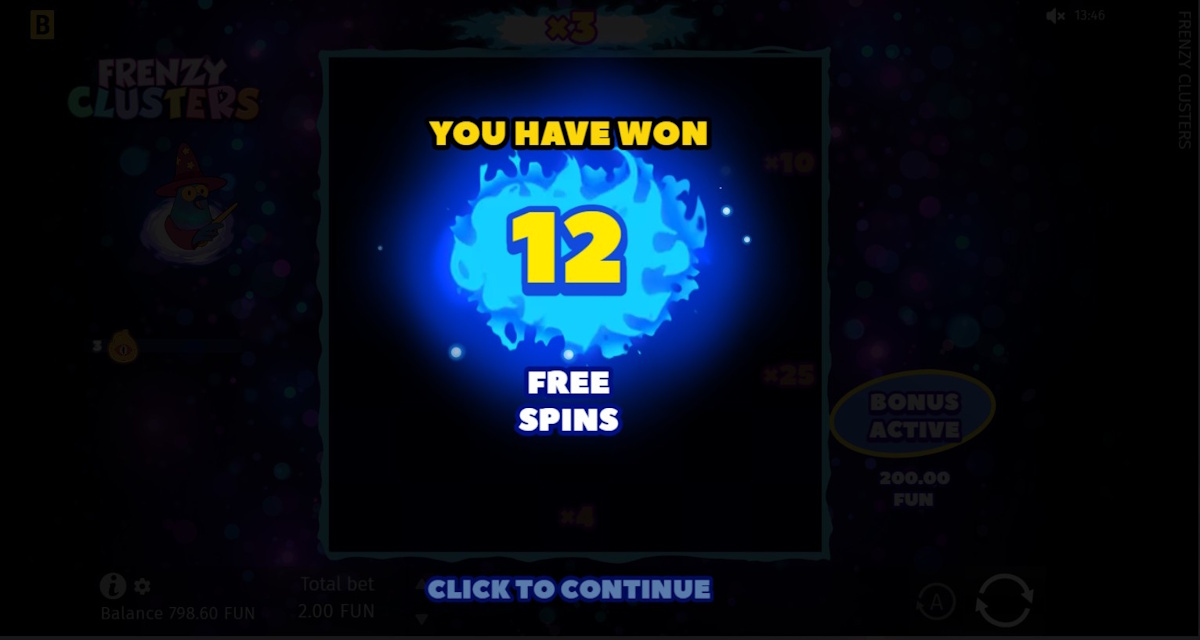
In the base game, the pace is faster, and there’s always something changing. In Free Spins, players have more time to build up the field and watch it become increasingly compelling with every cascade.
GS: Players can choose from five heroes before they start spinning. What was the idea behind this feature, and what role does it actually play in how the game feels?
AB: The idea for the heroes came from watching a lot of streams and looking at how players interact with games.
We noticed that in games with strong, memorable characters, players often become emotionally connected to the heroes. We wanted to bring that feeling into our own game. When players choose a hero themselves, it creates a sense of personal choice and makes them feel more involved. They start to associate the experience with that character.
The heroes themselves also underwent significant changes during development. In the early versions, we had completely different characters: a sloth, an owl, a platypus, and some other unexpected ideas. The final lineup only came together after many rounds of testing and iteration.
In the end, we settled on five unique heroes: Olaf the Goose, Bloke the Platypus, Golub the Pigeon, Aussie the Dog, and Hugo the Goblin. Each has their own personality and visual style, giving players someone to connect with from the very first spin.
GS: Locked Cells reset after every base game spin but persist throughout free spins. That split creates two very different rhythms. What drove that design choice, and how does it shape the player’s journey from the base game into the bonus?
AB: The idea was to make free spins play like a completely different part of the game, not just the same thing with extra spins added.
In the base game, the pace is faster, and there’s always something changing. In free spins, players have more time to build up the field and watch it become increasingly compelling with every cascade.
A big part of the design was creating that sense of anticipation — that moment when you’re thinking, “Okay, what’s going to happen next?” We didn’t want players to just watch spins go by. The goal was for every spin to feel like it could lead to something interesting.
Watching streamers and studying player behavior became an important part of developing Frenzy Clusters. We looked at what games were getting attention, focusing on how players reacted during streams: what moments captured their attention, what kept them watching, and when their interest started to fade.
GS: Rocket, Book, and Sphere symbols don’t award direct payouts but instead clear parts of the grid to create chain reactions. How does each one change the feel of a spin in its own way, and what was the intention behind offering this variety of modifiers?
AB: The idea behind these symbols was to make each spin feel less predictable. We didn’t want them to just be another way to give players a payout, we wanted them to create moments where the whole situation on the field can suddenly change.
Each symbol affects the grid in its own way, so every cascade can develop differently. Sometimes a single Rocket, Book, or Sphere can completely change the outcome of a spin and create a chain of events the player didn’t expect.
For us, the most important thing was adding more surprises and more memorable moments, rather than simply adding more ways to win.
GS: Streamers and players clearly play a role in shaping how modern slots are experienced. With Frenzy Clusters, how important were their insights to the development process, and what did you learn from them that you hadn’t anticipated?
AB: Watching streamers and studying player behavior became an important part of developing Frenzy Clusters. We looked at what games were getting attention, focusing on how players reacted during streams: what moments captured their attention, what kept them watching, and when their interest started to fade.
A lot of the game’s ideas came from these observations. The heroes, the darker atmosphere, the opening field, moving away from a traditional start screen, and even small idle animations were shaped by what we learned from watching players.
One of the biggest takeaways was how powerful small details can be. A simple animation or visual element can sometimes have a huge impact on the way players connect with the game, even more than adding a new mechanic.
Players continue to enjoy this type of gameplay, and there are many opportunities to experiment and find new approaches. Frenzy Clusters is definitely not the last game we plan to make in this genre.
GS: The game sits on high volatility with a 97.11% RTP and a 37.87% hit rate. Who is this game really designed for—casual spinners, bonus chasers, or somewhere in between?
AB: I’d say Frenzy Clusters is aimed at players who enjoy a bit more risk and involvement in games. It’s for people who like the idea that a big moment can happen at any time and enjoy chasing those high-impact situations.
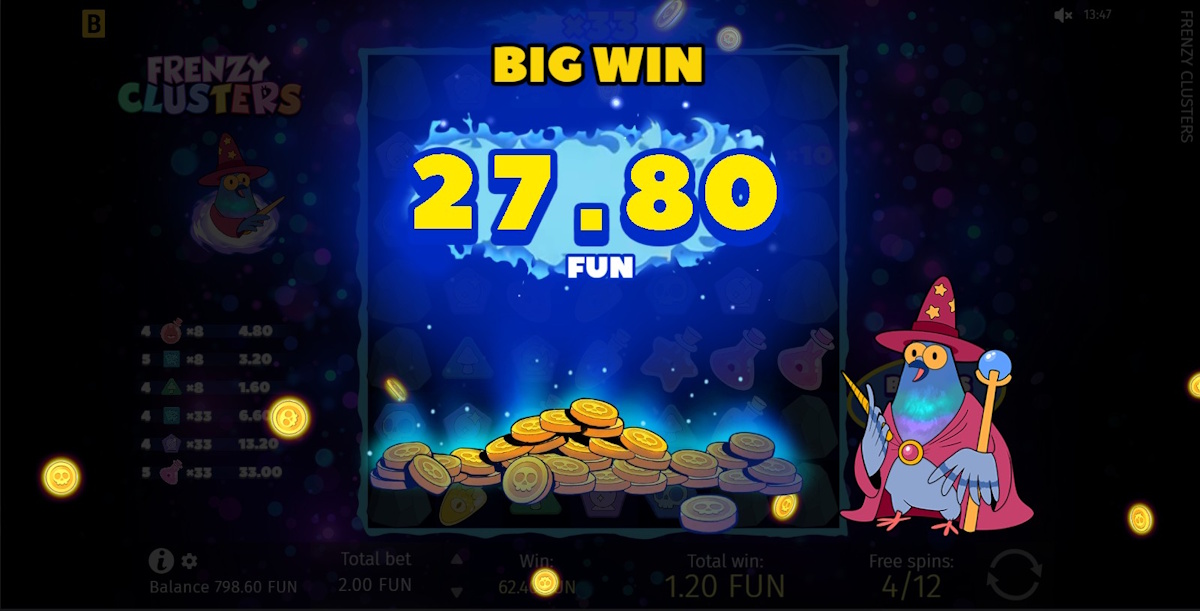
The high volatility and 10,000x Max Win are a big part of that experience. At the same time, we spent a lot of time balancing the game so bonus rounds still have value and don’t become frustrating too quickly. The goal was to make every bonus round feel meaningful, with enough potential to keep players curious about what might happen next.
It also works well for streamers and bonus hunters because the game naturally creates moments that are fun to watch: big reactions, unexpected cascades, and situations where the outcome can change in just a few seconds.
GS: Looking beyond Frenzy Clusters, what’s next for BGaming in the Cluster Pays space—or are you exploring other directions entirely?
AB: For BGaming, Frenzy Clusters is also a way to test new ideas and learn more about what works best for players.
After launch, we’re paying close attention to player behavior — which heroes they choose, how they interact with the new mechanics, and which parts of the game keep them engaged. This helps us understand which ideas from development worked well and what we can take into future projects.
When it comes to Cluster Pays, we still see a lot of potential in this mechanic. Players continue to enjoy this type of gameplay, and there are many opportunities to experiment and find new approaches. Frenzy Clusters is definitely not the last game we plan to make in this genre.
Frenzy Clusters released on June 23, 2026 on select casinos.